Accessory exercise guide
Bench Press Accessories for Healthy, Stable Shoulders
Bench press accessories are not only for adding weight to the bar. Face pulls, push-ups and controlled flyes can support shoulder, pectoral and scapular control, while close-grip and paused bench presses can target common strength weaknesses.
Choose the result you need
Five useful bench press accessory exercises

Shoulder health and stability
Seated face pull
A light rope face pull trains the upper back, rear shoulders and external rotators. Sitting on the floor can reduce lower-body assistance and make it easier to keep the movement controlled.
- Use a light load for 12–20 controlled repetitions
- Perform 2–4 sets with 2–4 repetitions in reserve
- Pause briefly with the rope near your face
Keep your ribs down and avoid turning the exercise into a heavy backward lean.

Warm-up and scapular movement
Push-up
Push-ups are a simple bench press warm-up. Unlike a barbell bench press, they allow the shoulder blades to protract and retract more freely, which can make them a useful option for scapular control.
- Perform 2–3 sets of 8–15 controlled repetitions
- Stop each set with 3–5 repetitions in reserve
- Use a hand position that feels comfortable
Keep your trunk stable and finish each repetition by gently pushing the floor away.

Controlled chest range of motion
Cable or dumbbell fly
Flyes train the pectorals through a lengthened position. Cables are often easier to control and let you adjust the path, while dumbbells are a useful alternative when a cable station is unavailable.
- Begin with a light load for 10–15 repetitions
- Perform 2–3 controlled sets
- Stop with 2–3 repetitions in reserve
A loaded stretch does not guarantee injury prevention. Use a pain-free range and do not force your shoulders into a deeper position than you can control.

Weak triceps or lockout
Close-grip bench press
Bringing the hands closer usually increases elbow flexion and the range of motion, giving the triceps more work. It can help build strength through the middle and upper portion of the bench press.
- Start around 50% of your bench press 1RM
- Perform 3 sets of 5–8 controlled repetitions
- Finish with 2–3 repetitions in reserve
A close grip does not need to mean 12 inches between your hands. If a very narrow grip irritates your shoulders or wrists, move each hand only about one hand-width inward from your normal bench grip.
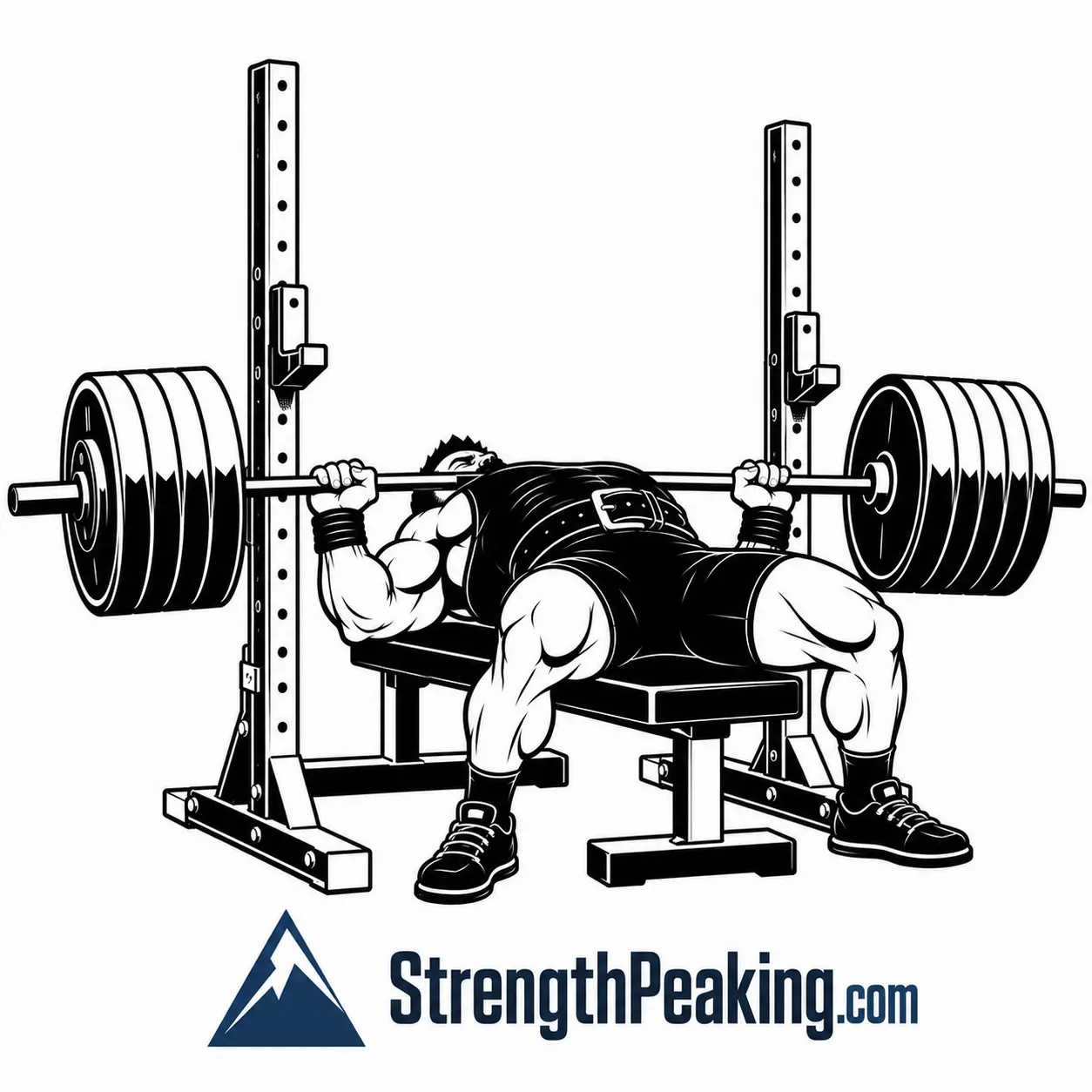
Weak off the chest
Paused bench press
Pause with the bar touching your chest while keeping your upper back, grip and leg position tight. Holding the position for 1–3 seconds removes momentum and gives you more practice producing force from the bottom.
- Start around 50% of your bench press 1RM
- Pause for a consistent 1–3 seconds
- Perform 3 sets of 3–5 controlled repetitions
Touch the same comfortable point on your chest each repetition and do not let the bar sink while you pause.
FAQs
Bench press accessory questions
Which bench accessories are useful for shoulder and scapular control?
Light face pulls and controlled push-ups are useful options. Face pulls train the upper back and external rotators, while push-ups allow the shoulder blades to move more freely than they do against a bench. Neither exercise should be used to train through pain.
How many bench press accessories should I use?
Choose one exercise for your main weakness and one or two lighter exercises for shoulder, scapular or chest control. Adding every variation at once makes fatigue and progress harder to evaluate.
Can I use these exercises after a shoulder or pectoral injury?
A previous injury may require different exercise choices and ranges of motion. Seek guidance from an appropriately qualified healthcare professional before using these exercises as rehabilitation or training through pain.