Accessory exercise library
Accessory Exercises for Squat, Bench Press and Deadlift
Accessory exercises can help you practise difficult positions, build supporting muscles and add useful training volume around the main lifts. Choose a guide for your squat, bench press or deadlift, then select an exercise that matches a weakness you see consistently.
Choose your main lift
Accessory exercise guides by movement
Each guide groups exercises by a recognisable weak point and includes conservative starting guidance. You do not need to use every exercise: begin with the guide that matches your current training priority.

Squat guide
Squat accessories
Explore front squats, back extensions, split squats and high box squats for quad strength, posterior-chain endurance, unilateral control and the upper half of the lift.
- Quad strength and torso position
- Posterior-chain endurance
- Unilateral and upper-half strength
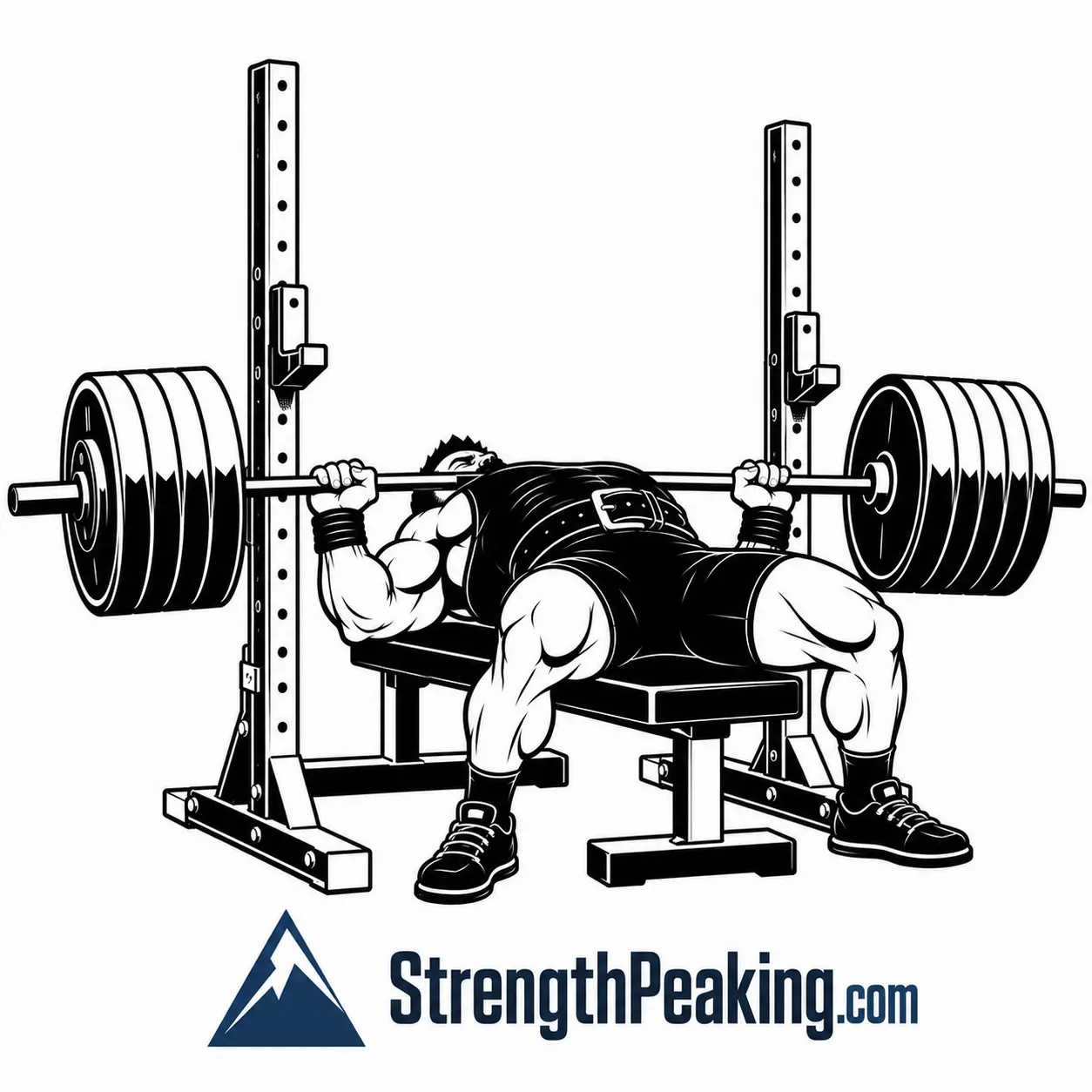
Bench press guide
Bench press accessories
Use face pulls, push-ups and controlled flyes for supporting work, then close-grip and paused bench presses for triceps strength, lockout and power from the chest.
- Shoulder and scapular control
- Triceps and lockout strength
- Strength off the chest

Deadlift guide
Deadlift accessories
Explore deficit deadlifts, block pulls, rows and back extensions for strength from the floor, lockout control, upper-back position and lower-back endurance.
- Strength from the floor
- Lockout and upper-back control
- Lower-back endurance
Keep the choice specific
How to choose accessory exercises
- Look for a repeated pattern. Use several training sessions rather than one unusually difficult repetition to identify a sticking point or loss of position.
- Check technique, fatigue and programming. An exercise variation cannot fix a poorly timed attempt, insufficient recovery or a working weight that is currently too heavy.
- Choose one main accessory. Add the exercise that most closely matches your current priority. One or two lighter supporting exercises may be useful, but adding every variation makes progress harder to evaluate.
- Progress the movement you can control. Add repetitions or a small amount of weight only when the range of motion and technique remain consistent.
Plan the main work first
Use accessories alongside a clear strength plan
Estimate a realistic 1RM, check useful training percentages and choose a progression method for the main lift before adding accessory volume. Accessories are most useful when their purpose is clear and their fatigue fits the rest of the programme.