Strength progression guide
Ways to Get Stronger Without Guessing
Getting strong is not one-size-fits-all. Adding weight to the bar is useful, but real strength progress can also come from more reps, better volume, improved recovery, cleaner technique and a training plan you can actually repeat.
- Progress with weight, reps or volume
- Fix common recovery and diet limits
- Use form, variation and motivation sensibly
Quick answer
What are the best ways to get stronger?
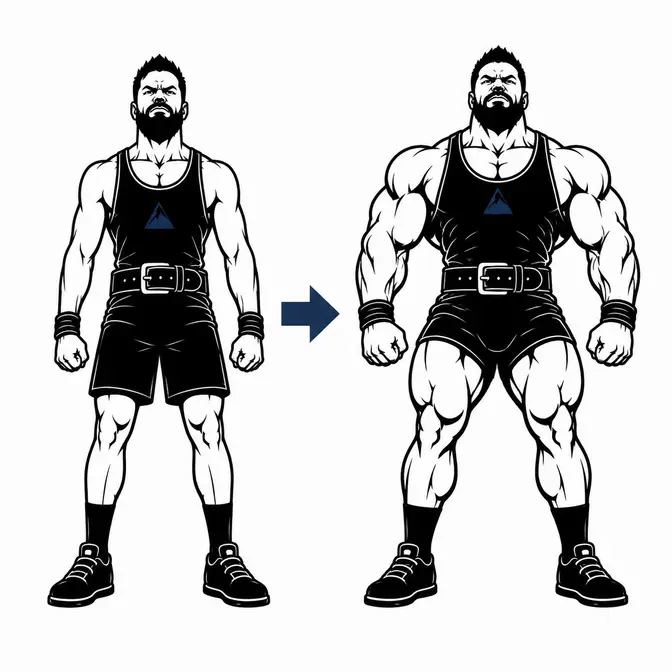
The best ways to get stronger are to train consistently, progress one variable at a time, eat enough to recover, sleep properly, manage stress and keep your lifting technique repeatable. Adding 5kg to the bar is a clear win, but it is not the only way to measure strength.
A useful strength plan should let you improve in at least one of these areas: load, reps, sets, total volume, technique quality, recovery or confidence under heavier weights.
Use the 1RM Calculator to estimate your current max from a recent working set, check training percentages with the 1RM Chart, and compare your lifts against standards with the Strength Calculator. From there, the 5/3/1 Calculator or Linear Progression Calculator can turn those numbers into a ready-to-use plan.
Progressive overload
Ways to measure strength progress
Strength progress does not always look like a bigger one-rep max. If your form is consistent, you can show progress by lifting more weight, doing more reps with the same weight, completing more quality sets or making the same session feel easier than before.
| Progress method | What it means | Example |
|---|---|---|
| Weight | Add load to the bar while keeping the same standard of technique. | Bench press 100kg this month after 95kg last month. |
| Reps | Complete more reps with the same weight before increasing the load. | Squat 100kg for 6 reps instead of 5 reps. |
| Volume | Do more total hard work by adding sets or repeatable quality reps. | Move from 3x5 to 4x5 at the same weight. |
| Technique | Lift the same load with better control, bracing, range of motion or speed. | Deadlift the same weight with a cleaner start position. |
| Recovery | Repeat hard sessions without feeling constantly beaten up. | Hit planned numbers two weeks in a row instead of crashing after one. |
1. Add weight to the bar
Adding weight is the most obvious sign of getting stronger. If you lifted 5kg more than last month with the same form and range of motion, that is clear progress. The mistake is forcing weight jumps when technique has already broken down.
2. Add reps before adding load
Adding an extra rep each week is a valid way to monitor strength. Keep the rep range sensible for the exercise and your goal. A set of 5 becoming a set of 6 is useful strength progress; a heavy lift turning into a 25-rep conditioning test may be a different training goal.
3. Add volume when load and reps stall
If the weight and reps are stuck, look at how many quality sets you can repeat. Moving from three hard sets to four hard sets can build the base for future heavier lifting, as long as recovery keeps up.
Strength calculators
Use calculators to choose your next progression
Once you know whether progress is coming from load, reps or volume, the next step is choosing realistic numbers. Start with your current strength level, then pick the progression style that matches how quickly you can still add weight.
1RM Calculator
Estimate your one-rep max from a recent working set so you are not basing the next block on an old personal best or a number you are not ready to repeat.
1RM Chart
Convert a known max into useful rep-max percentages and working weights for heavier sets, back-off work and realistic weekly targets.
Strength Calculator
Compare your lifts against bodyweight-based standards so you can see which lifts are ahead, which need more work and where your next strength goal should probably sit.
Linear Progression Calculator
Use linear progression when you can still make regular jumps in weight or reps and want a simple plan that moves forward week by week.
5/3/1 Calculator
Use 5/3/1 when progress needs to be more controlled, percentage-based and built around a conservative training max rather than constant aggressive jumps.
Recovery and fuel
What to check when your strength has stalled
If weight, reps and volume have all stopped moving, the answer may not be another brutal session. It may be food, sleep, stress or a recovery problem that is limiting what you can express in the gym.
Calories
If performance has stalled and bodyweight is not moving, adding a small calorie increase can help. A practical starting point is around 200 extra calories per day, then review bodyweight and training performance.
Diet and protein
Check that you are eating enough food and enough of the right foods. Many lifters use roughly 1g of protein per pound of bodyweight as a simple target, while keeping added sugar and low-quality calories under control.
Body composition
Strength often improves when you are well-fuelled, but gaining body fat without improving performance is not the goal. Keep body fat within a range that supports health, recovery and the lifts you care about.
Stressors
Work, commuting, poor routines and constant life stress can affect training. You do not need a perfect life to get strong, but you do need a way to stop stress from bleeding into every session. Sometimes that means taking five seconds before you reply, walking away, planning training around difficult days or reducing avoidable stress where possible.
Sleep
Better sleep is one of the simplest recovery upgrades. More sleep, more consistent sleep and better quality sleep can help you maintain performance, recover between sessions and actually grow from the training you are doing.
Technique, variation and motivation
Use form checks and exercise variation to keep progressing
When a lift stops improving, do not assume you are weak everywhere. You may have a specific technical issue, a weak range of motion, poor exercise selection or simply too much boredom from repeating the exact same work for too long.
Form checks
A coach or experienced lifter can spot power leaks: poor bracing, loose setup, inconsistent depth, bad bar path or a movement that does not suit your build. Fixing technique can make the same muscle stronger on paper.
Small variations
If you cannot progress the main lift, try a close-grip bench press, deficit deadlift, box squat, paused variation or tempo work. Use variation to solve a problem, not to avoid hard work.
Motivation and targets
Reasonable short-term targets are often enough motivation: one more rep, a cleaner set, a small personal best, or a number you believe your programme can actually deliver. A good training partner helps too. If they need to slap the back of your head before a heavy set, keep that between consenting adults and gym etiquette.
Hormonal factors
Hormones can be the elephant in the room around lifting weights, but start with what you can control: sensible training, enough calories, adequate protein, good sleep, lower stress and a body fat level that supports health. If energy, mood, sleep, libido or recovery feel unusually poor for a long time, speak to a qualified medical professional.
A simple way to get stronger over the next 8 weeks
Keep the plan simple. Pick the main lifts you care about, track the same exercises for long enough to learn from them, and change one variable at a time instead of rewriting your programme every week.
If you are still adding weight regularly, start with a simple linear progression plan. If progress is slower or you need more controlled loading, use the 5/3/1 Calculator to build percentages from a sensible training max.
- Choose 2 to 4 priority lifts. Focus on the lifts you actually want to improve, such as squat, bench press, deadlift, overhead press or a machine lift.
- Set a rep range. Use lower reps for heavier strength work and moderate reps for building repeatable volume.
- Progress reps first. Add reps until you reach the top of the range, then increase the weight and build back up.
- Add volume only when needed. If progress slows but recovery is good, add a set before changing the whole programme.
- Review recovery every week. Check sleep, calories, protein, stress and whether your joints feel ready to train hard again.
- Use a variation if the main lift is stuck. Pick a variation that targets the weak point, then return to the main lift and retest progress.
Common mistakes that stop people getting stronger
Changing exercises too often
Variety can help, but changing every session makes progress hard to measure. Keep the main lift stable long enough to improve it.
Adding weight with worse form
A heavier lift only proves strength if the standard is similar. Do not count sloppy reps as clean progress.
Doing too much too soon
More work can help, but only if you recover from it. Too much volume can bury performance instead of building it.
Ignoring food and sleep
Training creates the signal. Food and sleep help you adapt to it. If both are poor, strength progress usually becomes harder.
FAQs
Ways to get stronger FAQs
What is the fastest way to get stronger?
The fastest reliable route is consistent training with progressive overload, enough food, enough sleep and a plan that matches your current level.
Should I increase weight or reps first?
If your technique is solid, either can work. For many lifters, adding reps first is easier to control, then weight can be increased once the top of the rep range is reached.
How many reps are best for strength?
Heavy sets of 1 to 5 reps are useful for strength practice, while moderate reps can build the muscle and volume that support future strength.
Can I get stronger without gaining weight?
Yes, especially if you improve technique, consistency and nervous-system skill. However, some lifters progress better when they eat enough to support recovery and muscle growth.
Why am I not getting stronger?
Common reasons include poor sleep, not enough calories, low protein, too much stress, inconsistent training, too much volume, too little volume or technique that leaks power.
Should I use 5/3/1 or linear progression?
Use linear progression if you can still add weight or reps regularly. Use 5/3/1 when you need slower, percentage-based progress from a conservative training max.
Do I need a coach to get stronger?
Not always, but a good coach can speed things up by spotting technical errors, choosing better progressions and keeping your training honest.